December 9, 2025
Termites silently destroy homes from the inside out, often going undetected until thousands of dollars in damage have already occurred. Choosing a professional pest control service at the first warning sign can save you from expensive repairs and structural headaches. Here are the five most common indicators that termites may have invaded your property.
1. Hollow-Sounding Wood
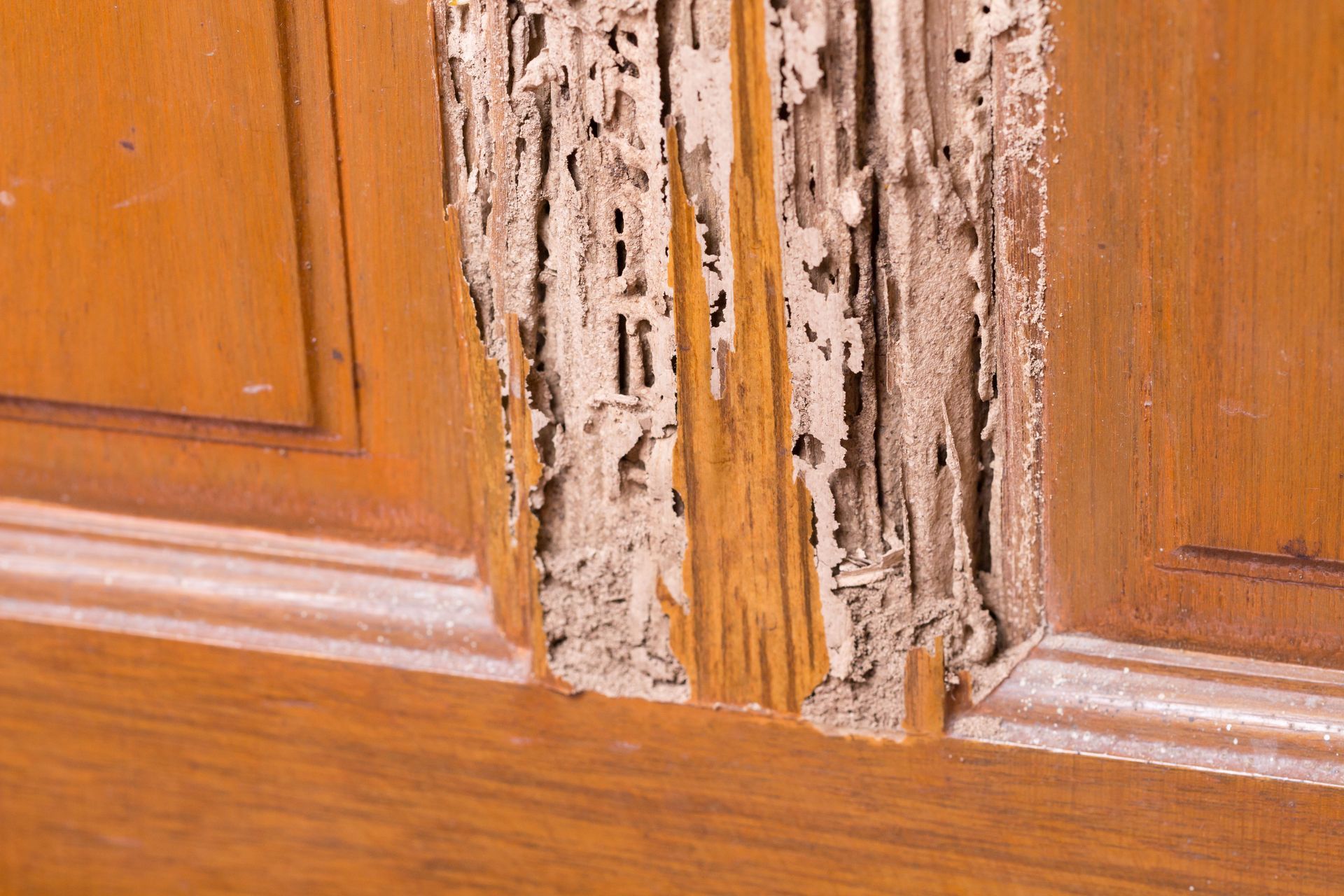
One of the earliest and most reliable signs of termite activity is wood that sounds hollow when tapped. Termites eat cellulose from the inside, leaving only a thin outer layer that can collapse under pressure. Start your inspection in areas where wood touches soil — foundation beams, support posts, and sill plates — because subterranean termites usually enter from the ground. Use the handle of a screwdriver to gently tap along baseboards, floor joists, and structural timbers. A dull, papery thud instead of a solid knock means the interior has been compromised.
This damage happens gradually but relentlessly. As termites tunnel and feed, they weaken load-bearing members that hold up your entire house. What begins as minor hollowness can quickly turn into sagging floors or even partial collapse in severe cases. Regular tapping inspections, especially in basements and crawl spaces, give you the best chance of catching the problem early. Many homeowners discover the issue only after a foot goes through a weakened floorboard — don’t let that be you.
Advanced tools can make detection easier. A quality moisture meter often reveals elevated readings in infested wood because termites bring moisture with them. Infrared cameras used by a professional pest control service can spot temperature differences created by active colonies. When in doubt, schedule an inspection immediately. Early discovery through simple tapping and professional verification is the smartest way to protect your largest investment from termite destruction.
2. Mud Tubes on Foundations and Walls
Subterranean termites build pencil-sized mud tubes to travel safely between their underground colony and your home’s wood. These shelter tubes, made from soil, saliva, and frass, protect termites from predators and dry air while maintaining the high humidity they need to survive. Look for them along exterior foundation walls, in crawl spaces, on piers, and sometimes running up interior basement walls. They often appear as raised, muddy lines resembling dirty icing on a cake.
Break a small section of a suspected tube and check back in a few days. If termites repair it, you have an active infestation that requires immediate attention from a licensed pest control service. Active tubes feel moist inside and may even have live termites visible when broken open. Exploratory tubes that branch out in multiple directions indicate the colony is still searching for new food sources — your floor joists and wall studs.
Mud tubes are one of the most definitive signs because only subterranean termites construct them. Finding even one intact tube usually means thousands of termites are already feeding inside your home. Professional pest control services use the location and extent of tubing to determine colony size and the best treatment approach, whether trench-and-treat soil applications or baiting systems. Acting the moment you spot these tubes prevents the infestation from spreading deeper into structural wood that’s far more expensive to replace.
3. Blistered or Bubbling Paint and Wallpaper
Termites generate moisture as they eat and tunnel, and that excess humidity trapped beneath paint or wallpaper creates blisters and bubbles that look remarkably like water damage. Unlike typical moisture problems that appear evenly across a wall, termite-related blistering is often irregular and clustered in specific areas where colonies are active. You might notice long raised ridges or small volcano-like bubbles on baseboards, door trim, or even ceiling drywall.
Peel back a small section of blistered paint carefully. If you see maze-like galleries, etched wood, or cream-colored worker termites, you’ve confirmed the culprit. According to industry research from Pest World, termites inflict more than five billion dollars in property damage across the United States every single year — much of it hidden behind perfectly normal-looking paint until the blisters appear.
Homeowners frequently mistake this damage for ordinary humidity issues and waste time with dehumidifiers instead of calling a pest control service. A trained inspector can quickly differentiate the two by probing for hollow wood and checking for other signs like frass or mud tubes nearby. Catching termite-induced blistering early often means the difference between a localized treatment and replacing entire walls or support beams. Schedule a professional inspection the moment you notice unexplained paint anomalies.
4. Discarded Termite Swarmers and Wings
Every year, usually in spring or after the first warm rain, reproductive termites called swarmers leave the colony to mate and start new colonies. After pairing off, they shed their wings, leaving piles of translucent, equal-length wings on windowsills, floors, and near light fixtures. Finding dozens or hundreds of these wings indoors is an emergency signal that a mature colony exists inside your walls.
Termite wings are all the same size and shape — unlike ant wings, which have one large and one small pair. The swarmers themselves are often dark brown or black with straight waists, again different from ants. Seeing even a few live swarmers flying around lights at dusk means the colony is large enough to produce reproductives, and that colony could number in the hundreds of thousands.
Don’t vacuum the wings until a pest control service documents the evidence. The location and quantity help technicians determine how many colonies may be present and where the main nest is likely located. Swarming season varies by region, but once you see wings, the clock is ticking. New satellite colonies can be established within days. Immediate professional treatment is the only way to stop the cycle before multiple colonies take hold.
5. Frass – Termite Droppings
Drywood termites leave behind one of the clearest calling cards: frass. These six-sided, wood-colored pellets are pushed out of tiny kick-out holes as the termites excavate galleries. You’ll typically find small mounds or scattered pellets beneath infested wood — along baseboards, on windowsills, inside cabinets, or drifting down from attic rafters. Frass is often the first visible proof of a drywood termite infestation.
Each pellet is remarkably uniform, about the size of a poppy seed, with concave sides that make it look almost like tiny footballs under magnification. The color matches whatever wood the termites are eating—light pellets from pine, darker ones from hardwood. Sawdust, by contrast, is irregular and powdery. If you’re sweeping up what looks like fine sand but it’s actually hexagonal pellets, you need a pest control service immediately.
Drywood termites can live entirely above ground, so frass can appear anywhere wooden elements exist — even in furniture or picture frames. Because these termites don’t need soil contact, infestations often go unnoticed longer than subterranean ones. Finding frass means the colony has already been feeding for months or years. Professional fumigation or localized treatment is usually required, making early discovery through regular frass checks essential for limiting damage.
Protect your home before termites turn small problems into high repair bills. If you’ve noticed any of these five warning signs — hollow wood, mud tubes, blistered paint, discarded wings, or frass — don’t wait. Contact The X-Terminator today for a thorough inspection and guaranteed pest control service. Our licensed technicians use the latest detection technology and environmentally responsible treatments to eliminate termites and prevent future infestations. Call The X-Terminator now and take the first step toward a termite-free home!